Blog
News
2026-10-05
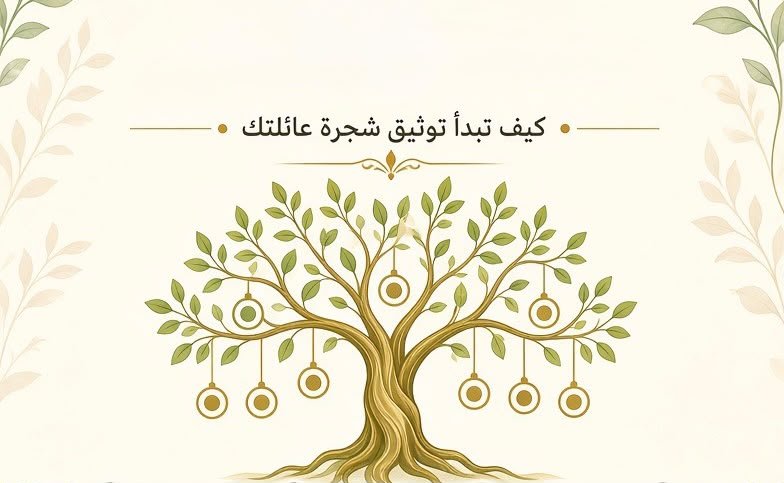
How do you begin documenting your family tree? From gathering names to a verified family tree The idea of a family tree often begins with a simple question: How do we gather the names of family members and document them correctly? The task might seem easy at first—especially when the names of ancestors and main branches are already known—but as the work begins, more questions arise: Where do we start? Who is responsible for gathering the data? How do we verify the accuracy of the names? What do we do when there are conflicting details? And how do we keep the tree updated once it is finished? That is why building a family tree does not begin with the design itself; it starts much earlier—with gathering, organizing, reviewing, and documenting information. In this article, we outline practical steps to help the family get started in a more organized way. Step One: Define the goal of the family tree Before gathering a single name, it is important to define the objective. Does the family want to create a concise tree showing only the main branches? Or do they want to document every family member? Is the goal to create a physical chart for a family gathering? Or to build a digital tree that can be updated in the future? Or perhaps to construct a database that serves as a family reference? These questions might seem premature, but they influence the volume of data the family needs to collect and how that data should be organized. The clearer the goal is from the start, the easier the project will be in the subsequent stages. Step Two: Start with existing information There is no need to start from scratch. Many families possess important information scattered among various members—such as old family trees, documents, records, books, photographs, and files previously compiled by a family member. Therefore, before you begin collecting new data, it is useful to look for what already exists. You might find an old family tree containing hundreds of names—one that simply needs reviewing, updating, and the addition of new generations. This saves a great deal of time and effort. Step Three: Divide the family into branches. Where should you start today? If your family is considering creating a family tree, do not start by worrying about the design layout. Begin with three things: Gather any existing family trees and documents. Identify the main branches and a point of contact for each one. Create a standardized form for collecting names and data. Once this is done, the picture will become clearer, allowing you to gradually move on to reviewing and verifying the information, and finally selecting the right design for the tree. A final thought… every name is part of the story. When you look at a family tree containing hundreds or thousands of names, it may initially appear to be just a vast collection of data. Yet, behind every name is a person; behind every branch is a story; and between one generation and the next lies a history that has been passed down to us. That is why documenting a family tree is not merely about arranging names on a chart. It is an endeavor that preserves a piece of the family’s memory and gives future generations the chance to understand their roots more clearly. Start with what you know today, ask those who hold the memories of the past, and carefully document what you gather; a piece of information that seems simple now could, in years to come, become an invaluable part of the family’s history.

News
2026-08-25
The Annual Family Gathering… A Meeting That Unites Hearts and Preserves the Story In a time when life accelerates, cities grow farther apart, and generations are preoccupied with their daily lives, the annual family gathering can become a distant dream, rarely realized. But a family that cherishes its annual gathering doesn't just maintain a date on the calendar; it preserves a deep connection, a shared memory, and a sense of belonging passed down from generation to generation. The family gathering is not merely a chance to chat or take photos; it's an opportunity to rekindle warmth, reconnect with relatives, listen to stories from elders, celebrate the achievements of children, and create memories that linger long after the occasion has passed. With families growing larger, branching out, and members scattered across cities, the need for an organized family gathering has become more important than ever. It's an annual event that strengthens bonds, preserves family history, connects generations, and transforms belonging from an internal feeling into a shared experience. Why Does a Family Need an Annual Gathering? Over the years, younger generations may become less familiar with their relatives, especially in large families with hundreds or thousands of members. A person might know their own branch of the family, but not the members of other branches, their stories, or their achievements. This is where family gatherings come in, rebuilding these bonds. They provide a space where elders meet with younger members, members of different branches get to know each other, and everyone feels like they are part of a single family unit. The Benefits of Annual Family Gatherings Family gatherings can contribute to: * Strengthening communication between

News
2026-11-08
<p>In many families, major initiatives begin with a simple idea proposed by one family member, then taken up by a group of enthusiasts who put it into action. The idea might be an annual gathering, a family fund, a project to document the family tree, or an initiative to support the family’s children.<br>Over time, these efforts expand, responsibilities grow, and questions arise that were not present at the beginning:<br>Who makes the decisions? Who follows up on implementation? How are priorities set? And what happens when the people leading the work change?<br>This is where the importance of a family council becomes clear—as an organizational framework that helps coordinate efforts, distribute responsibilities, and turn individual initiatives into sustainable collective work.<br>A family does not need organization because it lacks connection; it needs it in order to preserve that connection and strengthen its impact across successive generations.<br>What is a Family Council?<br>A family council is an organizational framework that brings together a group of family members who coordinate, plan, and follow up on shared family affairs and initiatives, according to goals and authorities agreed upon by the family.<br>The nature of the council may differ from one family to another depending on the number of its members, the distribution of its branches, and the scale of its activities and initiatives.<br>Some councils focus on meetings and communication, while others oversee committees, follow up on initiatives, coordinate the family fund, and preserve the family’s history and identity.<br>Having a family council does not mean interfering in the private affairs of individual members; rather, it means organizing the shared activities that require cooperation and coordination.<br>Why Do Large Families Need a Council?<br>When a family is small, coordination among its members can be relatively easy and direct.<br>But as the family expands, the number of its branches increases, and the interests of its members diversify, managing shared initiatives becomes more complex.<br>The family may face challenges such as:<br>Relying on a limited number of people to manage all the work<br>Unclear responsibilities among committees<br>Duplication of initiatives and efforts<br>Delays in implementing decisions<br>Difficulty communicating across different branches<br>Lack of clear plans for family projects<br>Some initiatives stopping when those leading them change<br>An organized council helps address these challenges and gives family activities a clear framework for planning and follow-up.<br>A successful council does not monopolize the work; it organizes the participation of family members in it.<br>Who Represents the Family on the Council?<br>One of the important questions when establishing a family council is: How are its members chosen?<br>There is no single method that suits all families; selection may be based on representation of branches, election, consensus, or a combination of more than one approach.<br>However, it is important to observe a number of principles:<br>Representation: Ensuring fair participation of the various family branches according to an agreed mechanism.<br>Competence: Benefiting from those who have organizational and administrative experience and capabilities.<br>Balance between generations: Combining the experience of older members with the ideas of younger generations.<br>Commitment: Choosing people who are willing to dedicate time and follow up on responsibilities.<br>Clarity of term: Defining the duration of membership and the mechanism for renewal or transfer of responsibilities.<br>The goal is to build a council that enjoys the trust of family members and can work in a team spirit.<br>What Tasks Can a Family Council Undertake?<br>Tasks differ according to the needs of each family, but they can include a number of main areas.<br>First: Strengthening communication and connection<br>The council contributes to organizing family meetings, developing means of communication, and encouraging initiatives that bring family members together.<br>Second: Planning initiatives<br>It works on setting annual priorities, discussing proposals, and directing efforts toward programs that benefit the family.<br>Third: Supervising committees<br>It follows up on the work of the various committees and helps coordinate their efforts and avoid overlapping responsibilities.<br>Fourth: Preserving family history<br>It supports projects to document the family tree, collect documents and photographs, and preserve historical stories and biographies.<br>Fifth: Following up on performance<br>It reviews what has been achieved from the initiatives, discusses challenges, and proposes necessary improvements.<br>Sixth: Developing family work<br>It seeks to benefit from technology and available expertise to develop methods of management, communication, and documentation.<br>Family Committees… the Executive Arm of the Council<br>It is not necessary for members of the family council to carry out all the work themselves.<br>The more initiatives expand, the greater the need to form specialized committees.<br>Depending on the size of the family, committees may include:<br>Social committee: for meetings, occasions, and strengthening communication<br>Initiatives and programs committee: for developing family activities and projects<br>Documentation and history committee: for the family tree, archives, and documents<br>Media and technology committee: for managing content, communication channels, and digital solutions<br>Education and youth committee: for educational and developmental programs and engaging young people<br>There may also be a specialized committee to follow up on the family fund, while taking into account the independence of its authorities and the requirements of its governance and formal organization.<br>What matters is not the number of committees, but that each committee has clear goals, defined responsibilities, and indicators that can be followed up.<br>The Family Charter… an Agreement That Preserves Clarity of Work<br>One of the most important steps a family can take is to prepare a charter or organizational bylaws that clarify how shared activities are managed.<br>The charter may include:<br>Objectives of the family council<br>Mechanism for selecting members<br>Duration of membership<br>Competencies and authorities of the council<br>Mechanism for holding meetings<br>Method of making decisions<br>Tasks and responsibilities of the committees<br>Mechanism for receiving proposals<br>Procedures for documenting decisions<br>Rules on conflicts of interest<br>Mechanism for reviewing and updating the charter<br>Having these rules does not mean turning family relationships into complicated formal procedures; rather, it helps reduce disagreements that arise from unclear responsibilities.<br>The clearer the rules, the easier the cooperation becomes, and the more confidently the work continues.<br>How Does the Family Council Make Its Decisions?<br>It is important that the decision-making mechanism be known in advance.<br>Some decisions may be simple and related to organizing an occasion, while other decisions require financial study or broader participation from family members.<br>Therefore, it is appropriate to define levels of authority, the decisions the council can approve, and the decisions that require approval from another body according to the adopted regulations.<br>Decisions should also be documented, with a person responsible for implementing each decision and an expected deadline for completion specified.<br>A decision that is not linked to a responsible person and a follow-up deadline may remain merely a recommendation in the meeting minutes.<br>How Do We Maintain the Continuity of the Council When Its Members Change?<br>One of the most prominent challenges in family work is that initiatives become tied to specific individuals.<br>A family member may lead a project for years, then the project stops when their circumstances or responsibilities change.<br>For this reason, the council should focus on building a system that preserves knowledge and transfers it among members.<br>This can be achieved through:<br>Documenting meeting minutes<br>Keeping decisions and files in an organized archive<br>Preparing clear annual plans<br>Defining the responsibilities of each member<br>Following up on progress periodically<br>Establishing procedures for handing over tasks<br>Involving new members in the work before responsibilities are transferred<br>In this way, the council becomes a continuous family institution, not merely a group of people meeting for a limited period.<br>Technology in the Service of the Family Council<br>Digital solutions can help the council organize its work and reduce reliance on scattered files and correspondence.<br>Through a suitable digital platform, it is possible to manage meetings, keep minutes, follow up on decisions, distribute tasks, organize documents, and track initiatives.<br>The council’s work can also be linked to other family services, such as the family tree, the annual gathering, committees, news, and announcements.<br>However, the success of technology depends on clear procedures and defined responsibilities; an application alone cannot compensate for the absence of organization.<br>How Does a Family Establish a Successful Council?<br>It is possible to begin with practical steps that suit the size of the family and its needs.<br>First step: Define the goal<br>Why does the family want to establish the council? What files does it need to organize?<br>Second step: Consult with family members<br>Listen to viewpoints and proposals, and arrive at a vision that enjoys appropriate acceptance.<br>Third step: Define the representation and selection mechanism<br>Establish a clear method for choosing members and determining the duration of their service.<br>Fourth step: Prepare the organizational charter<br>Document authorities, responsibilities, and the decision-making mechanism.<br>Fifth step: Set an annual plan<br>Select a limited number of priorities and initiatives that can be implemented.<br>Sixth step: Form committees when needed<br>Distribute the work among specialized teams according to the scale of the tasks.<br>Seventh step: Follow up on performance and evaluate results<br>Prepare periodic reports that show what has been achieved and what needs development.<br>It is not necessary for the council to begin with a large structure; a simple and organized start may be more successful than a broad structure that is difficult to operate.<br>How Do We Know That the Family Council Is Successful?<br>The success of the council is not measured only by the number of meetings it holds or the decisions it issues.<br>Rather, it is measured by the impact it achieves within the family.<br>Among the questions that help evaluate it:<br>Have responsibilities become clearer?<br>Has the participation of family members improved?<br>Have initiatives been implemented on schedule?<br>Have decisions become documented and can be referred to?<br>Has the council contributed to strengthening communication between branches?<br>Has it been able to engage young people and benefit from their experience?<br>Have the activities become able to continue without relying on a single person?<br>Answering these questions helps the council develop its performance year after year.<br>Final Word… Organization Preserves Efforts and Strengthens Belonging<br>Families possess many energies, experiences, and ideas, but the real value appears when these capabilities come together in shared work.<br>The family council is not an end in itself; it is a means to organize efforts, enhance participation, preserve initiatives, and turn ideas into results.<br>A family that organizes its work today does not only preserve its current achievements; it prepares for future generations a foundation on which they can build.<br>When love meets organization, experience meets participation, and vision meets implementation, the family council becomes a bridge that connects the efforts of the present with the ambitions of the future.<br>To build the family entity, contact us.</p>
News
2026-09-20
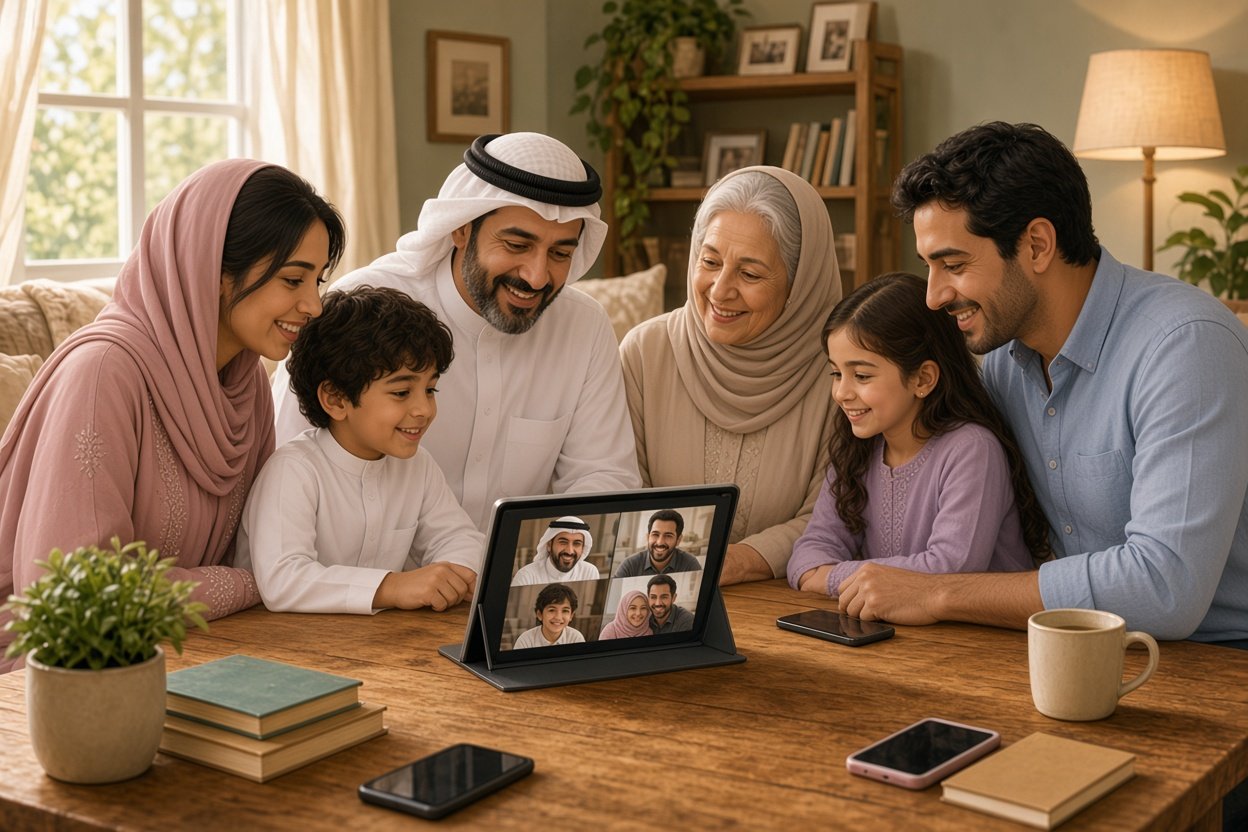
Many families start out the same way: A messaging group for announcements, another for the annual gathering, a family tree file held by one member, old photos scattered across various devices, family fund records in separate files, committee meeting minutes, and contact lists distributed among several people. Everything is there... But nothing is in one place. As the years pass, the family grows, and committee or initiative leaders change, a problem emerges: Where is the data? Who holds the latest version? How can the family’s history, projects, and information be easily accessed? This is why family digital transformation is no longer just about using technology; it has become a means to organize activities, preserve the family’s memory, and maintain connections among its members. The problem isn't a lack of information... it’s that the information is scattered. A family might possess a vast amount of information, yet it is distributed among different individuals, devices, and groups. One person holds the family tree. Another has photos from the last gathering. A third manages the family fund records. Someone else keeps the list of family contact numbers. And a committee holds the minutes of meetings and initiatives. This fragmentation makes access to information dependent on specific individuals; over time, this can lead to data loss, duplicated effort, or reliance on outdated versions. Therefore, the first step in digital transformation isn't adding more tools, but rather gathering what the family already has and organizing it in a clear, sustainable way. What does digital transformation mean for a family? Digital transformation does not mean eliminating family gatherings or replacing human connection with technology. Quite the opposite. The role of technology is to make communication and organization easier, allowing the family to focus on what matters most: the relationships between its members. Digital transformation can encompass: * A family member database. * An interactive digital family tree. * An archive for photos and documents. * Family news and announcements. * A calendar for events and gatherings. * Management of initiatives and programs. * Family fund services. * Processing of requests and proposals. * Documentation of meetings and decisions. * Showcasing family members' achievements. When these elements converge in a single environment, technology begins to play its true role. From "Family Group Chat" to an Organized Digital Community Messaging apps have played a vital role in bringing people closer and remain an effective means of quick communication. However, they were not designed to serve as a family archive, a database, or a platform for managing initiatives. Important messages can get lost amidst hundreds of others, old photos become difficult to locate after years, and sent files may become outdated once a new version is released. Therefore, the goal is not to replace communication groups, but to assign each tool its proper role. Messaging apps are for quick communication, while the family platform is for preserving knowledge and organizing services. The Family Tree: The Heart of the Digital Ecosystem A key component of the digital ecosystem is an updatable family tree. Instead of a static chart updated only every few years, it can become a living record that grows alongside the family. A new family member is born and added. Information is updated and reflected in the record. A new branch is added, or historical data is documented and preserved for future generations. In this way, the family tree transforms from a one-time project into an enduring digital memory. The Family Archive: A Memory That Shouldn't Stay on Just One Person's Phone How many old family photos currently reside on the phone of just one family member? How many historical documents are tucked away in a drawer? And how many recordings or stories about ancestors remain undocumented? Digital transformation offers families the opportunity to build an organized archive—one that can house photos, documents, video clips, stories, biographies, and records of significant occasions. The true value of this archive may not be fully realized today. It might only become apparent twenty or thirty years from now, when a grandchild searches for a photo of their grandfather or a story from before they were born, only to find it preserved within their family’s shared memory. Technology Bridges the Generational Gap One challenge facing large families is the difference in communication styles across generations. Older generations hold the history and experience. The younger generation lives and breathes technology every day. When a family uses technology effectively, it can bring these two worlds together. A young person can browse the family tree, read their grandfather’s story, view vintage photos, learn about relatives' achievements, and keep up with family events and initiatives—all in one place. In this way, technology becomes a bridge between generations, rather than a barrier. What Can an Individual Find on Their Family Platform? Imagine a family member accessing their family’s dedicated digital space and finding: The family tree, family news, upcoming events, family fund initiatives, a historical photo album, members' achievements, announcements, the annual calendar, and services provided by family committees. Instead of searching through dozens of messages and files, all essential information is centralized in one location. This is what distinguishes a family platform from a mere communication channel. Privacy Above All Family data is not public content. Names, contact details, photos, documents, and financial or social data require careful management of access rights and privacy. Therefore, privacy must be a fundamental component of any digital transformation within the family. Not every individual needs access to every piece of information. You can define who can view the data, who can edit it, and who manages each section, as well as distinguish between information available to all family members and information that is restricted. Good technology does not simply make data available to everyone; it makes it available to the right person at the right time. Don’t start with the technology… start with the family’s needs. A common mistake is to begin by asking: "What app do we want to build?" Whereas the better question is: "What problems do we want to solve?" Is the issue updating the family tree? Poor communication? Scattered documents? Managing the family fund? Organizing events? Or all of the above?

News
2026-07-13
In the past, family ties were built on frequent gatherings, the preservation of genealogies by memory, and the passing of news among family elders. With changing lifestyles, the expansion of cities, and the migration of family members between different regions, maintaining these bonds has become more challenging than ever. Today, the question is no longer: Does the family need organization? Rather, the question has become: How can the family maintain its cohesion and ensure its continuity for future generations? ⸻ The Family… A Social Institution Worthy of Management Every large family possesses the elements that make it resemble a complete institution; it comprises hundreds, perhaps thousands, of members, and has events, initiatives, a financial fund, documents, a history, and successive generations. However, these aspects are often managed in an ad hoc manner, relying on specific individuals. Over time, information is lost, mistakes are repeated, and it becomes difficult to maintain continuity. Therefore, family management has become a modern concept that aims to transform family work from individual efforts into a clear and sustainable system. ⸻ What Does Family Management Mean? Family management involves organizing all aspects of the family within a clear framework that facilitates continuity and transmission across generations. This includes: * Maintaining family member records. * Documenting the family tree. * Organizing annual meetings. * Managing committees. * Preserving historical documents and photographs. * Managing the family fund. * Monitoring initiatives and programs. * Documenting decisions and minutes. * Facilitating communication among family members. When these elements are interconnected, the family becomes more capable of growing and thriving, regardless of its size. ⸻ Challenges Facing Families Today As families expand and their members increase, recurring challenges arise, most notably: * Difficulty accessing family member records. * Lack of an up-to-date family tree. * Weak communication between different branches. * Loss of historical photographs and documents. * Duplication of effort for each occasion. * Absence of official documentation for meetings and decisions. * Reliance on a single individual to manage all files. Often, the effects of these problems only become apparent years later, when information begins to fade or responsibilities become difficult to transfer to a new generation. ⸻ How can technology help in family management? Technology is no longer just a means of communication; it has become a tool for organizing knowledge, preserving history, and building sustainability. Through digital solutions, a family can have: * An up-to-date database of all its members. * An interactive and constantly updated family tree. * A dedicated family app that compiles news and events. * A digital archive of photos and documents. * A calendar of family events. * A system for managing meetings and decisions. * Statistics that help in planning future initiatives. Thus, information becomes preserved and accessible, no longer dependent on people's memories or scattered files. ⸻ The real investment… in family sustainability. When a family invests in organizing its data and documenting its history, it is not just investing in a program or an app, but in a legacy that will remain for children and grandchildren. An organized family can: * Preserve its history. * Strengthen bonds among its members. * Support social initiatives. * Pass on knowledge and experiences across generations. * Build a stronger and more sustainable family identity. ⸻ The Right Start A family doesn't have to start everything at once. The first step is often to collect data on family members and document the family tree. The system then gradually expands to include meetings, committees, events, a family fund, and a digital archive, until all family activities are integrated into a single, comprehensive system. ⸻ A Final Word Families are one of the most important components of society. The more organized and connected they are, the better able they are to preserve their history, reinforce their values, and build a better future for their children. Family organization today is not a luxury, but a practical step towards sustainability, preserving heritage, and creating an identity that will endure for generations to come. ⸻ Are you thinking about organizing your family? Start by documenting the data of family members, then lay a solid foundation upon which everything that comes after can be built, for the future begins with an organized step.

News
2026-07-27
The Family Tree… Why It's No Longer Just a Chart of Names When many people hear the phrase “family tree,” they picture a paper chart listing the names of parents, grandparents, and children, displayed in the family room or kept among old documents. But the reality today is quite different. With technological advancements and the increasing size of families, the family tree is no longer just a means of tracing lineage. It has become a knowledge base that preserves family history, organizes data, connects family members, and documents its heritage for future generations. The Family Tree… A Memory That Shouldn't Be Lost Every family has a story worth telling, and every member has a place in that story. Over the years, many important details may be lost: * Names of ancestors and family branches. * Dates of birth and death. * Places of settlement and migration. * Old photographs. * Historical documents. * Stories of influential figures in the family. * Achievements and initiatives that shaped the family's history. * When this information isn't documented, a part of the family's history disappears over time. Why do families need an updated family tree? Some families may have a paper family tree created years ago, but it no longer reflects current realities. Every year, new names are added to the family, data changes, and the number of branches increases, making it essential to update the tree to maintain its accuracy. The more frequently the tree is updated, the more reliable and accessible the information becomes. More than just names A modern family tree doesn't just show names and genealogical records. It can include information that helps the family better organize its data, such as: * Family member information. * Branches and clans. * Photos of individuals. * Profiles of each individual. * Academic and professional achievements. * Historical documents. * Old photographs. * Historical settlements. * Contact information, when needed. In this way, the family tree becomes a comprehensive historical record of the family. When Family Trees Go Digital Digital transformation has given families capabilities that were previously unavailable. Instead of relying on a paper copy that is difficult to update, a digital family tree now allows for: * Easy data updates. * Quick searches for any family member. * Access to information at any time. * Data backups. * Reduced risk of data loss. * Sharing the family tree with family members according to specific permissions. * Continuous monitoring of additions and updates. This makes managing family data more flexible and sustainable. Between Paper and Digital Family Trees Each type has its role and importance. A paper family tree offers a heritage and aesthetic dimension and is a distinctive documentary piece that can be displayed in gatherings or family events. A digital family tree, on the other hand, is characterized by ease of updating, searchability, data saving, and linking to additional information that is difficult to include in a paper version. This is why many families are opting to combine the two: a paper copy to preserve their heritage and a digital copy to keep pace with the family's evolution. Documentation is a Shared Responsibility The success of a family tree depends not only on its design but also on the cooperation of family members in providing accurate information, regularly updating data, and reviewing any changes that occur within the family. Every new addition today will become part of the history that children and grandchildren will learn about in the years to come. A Family Tree… An Investment in the Future Some may think that creating a family tree is a one-time project, but in reality, it is an ongoing project that grows as the family grows. Every new birth, every achievement, every document, and every photograph represents a new addition to the family record and enhances the value of this heritage over time. Therefore, the best time to start is today, before details are lost or become difficult to retrieve. A Final Word A family tree is not just a way to know who belongs to whom; it is a living record that preserves identity, strengthens belonging, connects the past with the present, and provides future generations with a reliable source that informs them about their history and roots. Every name that is documented today, and every piece of information that is preserved, is a new building block in the family's memory that will remain a witness to its history for many years to come.

News
2026-09-05
In every family, there are situations that exemplify the spirit of solidarity: helping someone in need, supporting a student, standing by a family facing an emergency, contributing to medical treatment, or participating in an event that brings family members together. These initiatives often begin spontaneously, led by a number of family members driven by love and a desire to do good. However, as the family grows, its members increase, and its needs and initiatives diversify, the need arises to move from scattered individual contributions to organized and sustainable family work. This is where the family fund comes in. The fund is not simply an account where contributions are collected; rather, it can be one of the most important tools that helps the family organize solidarity, finance its initiatives, support its members, and transform the values of cooperation into a lasting legacy that extends from one generation to the next. What is a family fund? A family fund is an organized framework through which financial contributions are pooled for goals and programs agreed upon by the family, according to a clear mechanism for managing resources, expenditures, and follow-up. The fund's objectives may differ from one family to another, depending on its needs and priorities. A family fund might focus on social solidarity, while another concentrates on education, events, family initiatives, or a combination of several areas. The important thing is that the fund has a clear objective, a structured mechanism, and management that enjoys the trust of family members. Why does a family need a structured fund? Without a structured fund, financial initiatives may rely on individual efforts or collecting money as needed. This approach might work for a while, but it becomes increasingly difficult as the family grows and the number of initiatives increases. A structured fund helps to: * Organize family contributions. * Prioritize spending. * Provide resources for agreed-upon initiatives. * Strengthen solidarity among family members. * Increase transparency in managing finances. * Ensure the continuity of initiatives and prevent dependence on a single individual. * Plan for future projects more effectively. * Build trust and encourage family members to participate. This shifts the focus from reacting to needs to proactive planning and preparation. What can a fund offer a family? A fund should not be viewed solely as an emergency aid solution. Depending on each family's goals and capabilities, its scope can be expanded to include numerous impactful initiatives. Social Solidarity Programs can be developed to support family members in circumstances defined by the fund's policy, preserving privacy and dignity and ensuring fair procedures. Education and Excellence Scholarships, training programs, competitions, and the recognition of high-achieving students and graduates can be supported, encouraging family members to continue striving for excellence. Social Initiatives Periodic reports on results and impact can be submitted. 9. Continuously Review and Improve the Experience. A well-organized start, even a small one, is better than a large project based on improvisation and lacking a clear foundation. The Fund is Part of the Family System The family fund should not operate in isolation from the rest of the family's activities. When it is linked to the family tree, annual meetings, committees, initiatives, communication channels, and technology, it becomes: Thus, the tools are integrated to serve one goal: A more cohesive, organized, and sustainable family. A final word… The value of a fund lies in what it creates, not in what it accumulates. The success of a family fund isn't measured solely by the amount of money it holds. Rather, it's measured by the most important question: What have these resources done for the family? Have they helped alleviate a need? Have they supported education? Have they encouraged excellence? Have they brought family members together around a beneficial initiative? Have they created a lasting impact? A successful fund is one that transforms individual contributions, regardless of their size, into shared value felt by everyone. And when solidarity is combined with organization, resources with governance, and initiatives with sustainability, the fund becomes more than just a financial repository… It becomes a means of preserving the meaning of solidarity.

News
2026-08-09
Families have gathered since ancient times for holidays, special occasions, and visits. These gatherings have always been a natural way for relatives to connect and strengthen their bonds. However, with the expansion of families, the diversification of their branches, and the dispersal of their members across cities, the annual family reunion has become more than just a meeting of relatives in one place. It is an occasion for generations to get to know one another, for honoring elders, celebrating achievements, reinforcing identity and belonging, and launching initiatives that benefit the family throughout the year. The difference between a gathering that is forgotten after it ends and one that family members look forward to every year often lies in the planning and the experience shared by those present. Why does a family need an annual reunion? As a family grows, it becomes more difficult for all its members to know each other. A father may know his cousins, while his children may not know the younger generation of their relatives. As the years pass, social distances between branches begin to widen. This is where the importance of the family reunion becomes apparent, serving as a periodic meeting point that brings together different generations and branches. A successful family gathering helps to: * Strengthen bonds between family members. * Enhance intergenerational communication. * Introduce children to their family history. * Honor elders and family leaders. * Celebrate graduates and those who have achieved success. * Highlight family initiatives and projects. * Foster a spirit of participation and belonging. * Create shared memories among family members. Thus, the gathering becomes a means of building connection, not just a social occasion. A successful gathering begins before the day of the event. A common mistake is to start planning a family gathering with the question: Where will the gathering be held? The more important question is: What do we want family members to take away from this gathering? Is the goal to get to know each other better? Do we want to introduce the younger generation to the family history? Are there graduates and achievements we want to celebrate? Does the family want to launch a new initiative or project? Is there a specific message we want to convey to our children? Once the goal is defined, choosing the program, venue, and activities becomes clearer. How to create a special family reunion program? The program doesn't need to be long or packed with segments. What's most important is that it's diverse and gives every age group a reason to enjoy and participate. The program can combine several elements, such as: Formal aspect: Family speeches, presentation of initiatives, announcement of projects, review of the year's achievements. Social aspect: Introductions, hospitality, meetings between branches and generations. Recognition aspect: Honoring elders, graduates, outstanding members, and those with achievements. Entertainment aspect: Competitions, raffles, games, and interactive corners for children and youth. Historical aspect: Displaying old photos and documents, the family tree, the family story, and milestones in its history. When these elements are integrated, attendees transform from passive recipients to active participants in the event. Make family history present. One of the most beautiful aspects of an annual reunion is for family members to see their history firsthand. Space can be allocated to display: * Family tree. * Historical photos. * Documents and manuscripts. * Influential figures. * The family's origin story. * Key historical milestones. * Achievements of family members. This type of content holds special value for the younger generation because it transforms the history they hear about into a tangible experience they can see and interact with. Don't forget the younger generation. If we want family gatherings to continue in the future, children and young people must feel included. Therefore, it's important that the gathering isn't designed just for adults. The younger generation can be engaged through cultural competitions about the family, interactive displays, educational and recreational experiences, honoring graduates, and giving young people the opportunity to participate in organizing, presenting, and creating content. A child who experiences a positive family gathering today will be more connected to it as they grow up. Honoring Achievements Creates a Positive Culture Celebrating achievements is one of the most impactful aspects of family gatherings. When a graduate, high achiever, or someone with a professional or community accomplishment is honored in front of their family, the recognition doesn't just affect the individual. It sends a message to the younger generation: Our family values knowledge, success, and giving back. As this tradition continues year after year, honoring becomes an integral part of the family culture. From Gathering to Annual Family Memory It's important that the value of the gathering doesn't end with the occasion. Each gathering can be documented, and its outcomes preserved, such as photos suitable for sharing, awards, announced initiatives, resolutions, the names of graduates and high achievers, and other important information. Over the years, an annual family archive is formed, documenting its development, achievements, and events. After ten or twenty years, this material becomes an important part of the family history. Organization Makes the Difference The success of a family gathering doesn't necessarily depend on the size of the budget. A simple but well-organized meeting with a clear theme can have a greater impact than a large, poorly planned event. Good organization involves a comprehensive process that begins well in advance: Invitations and registration, attendance management, program preparation, venue setup, organizing the awards ceremony, managing activities, welcoming guests, documentation, and then measuring attendee satisfaction after the meeting. Each of these points impacts the final experience. A family gathering is part of a larger project. The best gatherings are not isolated events separate from the rest of the family's activities.